logo slogan head1 head2
Home
|
Links
|
Contact Us
shadow
treatments
ine
staff
ine
conditions
ine
location
leftimae
 
line2
CONDITIONS TREATED

Lower Back

body
body1

Low Back Pain:
Low back pain can be caused by many different factors. Muscle strains and lumbar spasms are the most common causes of low back pain. Other causes may include bulged/ruptured/herniated discs, joint sprains, degeneration, or stress fractures. Many of these conditions are described on this website. The patient needs to be thoroughly assessed and the cause of the pain determined before an individualized treatment approach can be developed. Once the cause is determined...

Treatment includes:
Education about the condition and how to avoid making it worse.

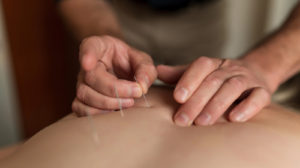
Therapeutic modalities to improve circulation and/or reduce inflammation and pain such as ultrasound, laser, interferential current, electrical muscle stimulation, acupuncture.

Exercises to stretch or strengthen the appropriate muscles or stabilize the joint.

Manual therapy to improve the movement in the area.

Degenerative Disc Disease:
Degenerative Disc Disease is a common part of aging. It is a gradual deterioration of the disc or cushion between the vertebrae. This causes a narrowing of the space between vertebrae causing low back pain from increased compression on other pain sensitive structures such as the facet joints and nerves which can sometimes cause leg symptoms. This condition is not the same as a herniated disc and the exercise protocol is completely different (flexion instead of extension).

Treatment includes:
Education about the condition and how to avoid making it worse.

Therapeutic modalities to improve circulation and/or reduce inflammation and pain such as ultrasound, laser, interferential current, electrical muscle stimulation, acupuncture.

Exercises to stretch or strengthen the appropriate muscles or stabilize the joint.

Manual therapy to improve the movement in the area.

Disc Injury:
The disc is a cartilage cushion that rests between the bones (vertebral bodies) of the spine. A disc bulge is a word commonly used to describe a slight out pouching of the disc. More extensive injury (herniation) may cause the disc to push out against the spinal nerves and cause pain or numbness into the legs. This is sometimes referred to as "sciatica" .

Treatment includes:
Education about the condition and how to avoid making it worse (sitting, bending forward, compression, twisting, vibration).

Therapeutic modalities to improve circulation and/or reduce inflammation and pain such as ultrasound, laser, interferential current, electrical muscle stimulation, acupuncture.

Exercises to stretch or strengthen the appropriate muscles and decrease the pressure on the disc (McKenzie protocol).

Manual therapy techniques such as traction to reduce the pressure on the nerve and improve the movement in the area.

Facet Joint Sprain:
This is a sprain of the ligaments that support the vertebrae in the spine. This is often caused by a forceful traumatic movement forcing the body into an extended and rotated position or a forceful flexion rotation (i.e. a motor vehicle accident, sports trauma, slip and fall). Like other joint sprains, the joint will initially be inflamed followed by the healing and remodeling of the ligaments.

Treatment includes:
Education about the condition and how to avoid making it worse.

Therapeutic modalities to improve circulation and/or reduce inflammation and pain such as ultrasound, laser, interferential current, electrical muscle stimulation, acupuncture.

Exercises to stretch or strengthen the appropriate muscles.

Manual therapy to improve the movement in the area.

Sciatica:
Sciatica is often caused from a herniated disc (also known as a ruptured disc, pinched nerve, slipped disc etc). This puts pressure on the nerve roots in the spine which make up the sciatic nerve. The sciatic nerve runs from the low back, through the buttock, and down the back of each leg. Sciatica can also develop from wear and tear as opposed to a particular event. Swelling around a joint in the lower back can irritate the nerve roots in the spine which make up the sciatic nerve and cause this severe leg pain.

Treatment includes:
Education about the condition and how to avoid making it worse.

Therapeutic modalities to improve circulation and/or reduce inflammation and pain such as ultrasound, laser, interferential current, electrical muscle stimulation, acupuncture.

Exercises to stretch or strengthen the appropriate muscles.

Manual therapy, especially traction to reduce the pressure on the nerve roots and improve the movement in the area

Spondylolisthesis/ Spondylolysis:
Spondylolisthesis is a forward slippage of a vertebra. It may be caused by a defect in a part of the vertebra that restrains forward movement. This condition can be present in children and also in adults. It is common in gymnasts who frequently hyperextend their lower backs. People with this condition complain of pain after activities requiring running, jumping, bending, and twisting. A step deformity may also be present. This is a hollow or space in the low back where one vertebra is further forward than the one below. This can be felt with the hands. An x-ray is taken to confirm the diagnosis.

Treatment includes:
Education about the condition and how to avoid making it worse.

Therapeutic modalities to improve circulation and/or reduce inflammation and pain such as ultrasound, laser, interferential current, electrical muscle stimulation, acupuncture.

Exercises to stretch or strengthen the appropriate muscles.

Manual therapy to improve the movement in the area.

Stenosis :
Stenosis is a narrowing of the spinal canal (the central hole in the spine where the spinal cord or the nerves from the spinal cord begin). Stenosis may be due to bony changes in the canal, or thickening of other tissues that may cause space to be taken up in the spinal canal. Stenosis is most common in elderly patients. Symptoms vary but some common ones include low back pain, numbness and tingling in one or both legs when walking, and/or cold sensation in one or both legs. These symptoms seem to worsen with standing or walking for a specific period of time and decrease with sitting, bending forward or rest.

Treatment includes:
Education about the condition and how to avoid making it worse.

Therapeutic modalities to improve circulation and/or reduce inflammation and pain such as ultrasound, laser, interferential current, electrical muscle stimulation, acupuncture.

Exercises to stretch or strengthen the appropriate muscles, primarily flexion exercises of the lumbar spine.

Manual therapy to improve the movement in the area.

top
 
foot1 Copyright 2007 Beaverbank Orthopaedic and Sport Physiotherapy . All rights reserved foot2